Myanmar Spring Chronicle – Scene on December 22
(Mizzima) December 23, 2025
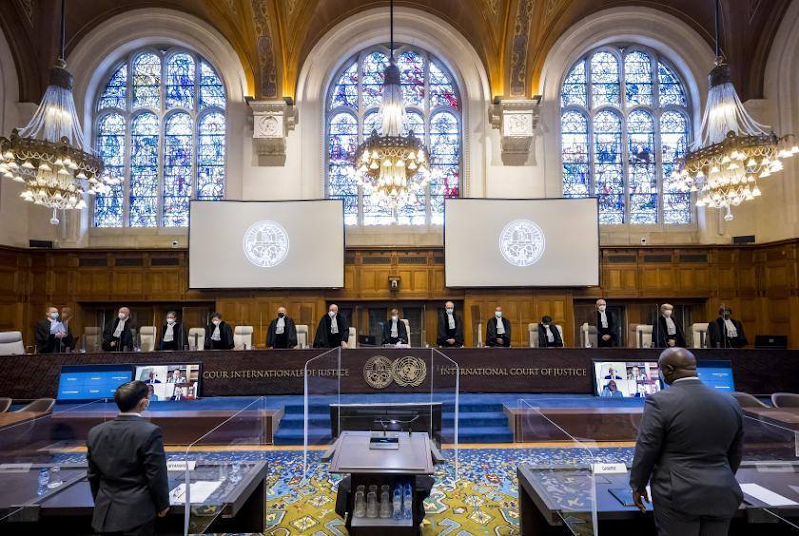
The ICJ to hold a third hearing in the genocide case
After the Myanmar military’s operations in northern Rakhine State in August and September 2017—during which thousands of Rohingya civilians were killed and an estimated 700,000 to nearly one million Rohingya fled to a neighboring country—The Gambia filed a case at the International Court of Justice (ICJ) alleging genocide.
According to reports, the third round of hearings will take place next month: the ICJ will hear The Gambia’s submissions from January 12 to 15, and will then hear Myanmar’s submissions from January 16 to 20.
The ICJ accepted the case in 2019, and late that year Aung San Suu Kyi, then the leader of the ruling NLD and head of Myanmar’s government delegation, traveled to the court to present Myanmar’s position.
The ICJ, the principal judicial organ of the United Nations, adjudicates disputes between states. It hears matters such as territorial disputes, treaty violations, human rights issues, and genocide. It does not try individuals, organizations, or militaries; its judgments address states.
This case concerns Myanmar’s responsibility for what happened in 2017, when Rohingya communities were killed and hundreds of thousands were forced to flee the country.
When Aung San Suu Kyi went to The Hague in 2019 to defend Myanmar regarding the 2017 operations, some politicians and human rights activists argued she should not go. However, many people in Myanmar believed the events were not genocide, but rather a military “clearance operation” against the ARSA armed group.
Most Myanmar citizens—including many politicians and even government officials—did not know the full details: what kinds of killings occurred, how many civilians versus combatants were killed, and whether children, women, pregnant women, and the elderly were killed without distinction.
In connection with the 2017 operations against ARSA in northern Rakhine, two investigative commissions were formed, and the military also formed its own inquiry body including senior officers. Reports were issued, and the military said it took action internally.
Only after the 2021 coup, the article says, did the anti-junta public and some politicians increasingly accept that the 2017 operations might amount to genocide and war crimes.
The article also argues that attempts to drive Rohingya out of Myanmar did not begin in 2017; similar episodes occurred around the 1980s under the Ne Win–led BSPP era, though what specific war crimes may have been committed then was not clearly known.
It further notes that after a rape-and-murder incident in Kyauk Ni Maw village in 2012, killings of Muslims in Taungup weeks later, and communal unrest in Maungdaw, long-simmering tensions in Rakhine reignited—suggesting that authoritarian governments often divert political discontent into ethnic conflict.
The mass deaths and displacement in northern Rakhine in 2017—now alleged as genocide—can also be seen, the article says, as one factor that derailed Myanmar’s democratic transition.
Under a military led by current coup leader Min Aung Hlaing (then Commander-in-Chief), the article says the pattern of abuses against minorities followed long-used tactics of successive military regimes: killings, sexual violence, burning and destroying villages, and “scorched-earth” methods aimed at denying armed groups places to hide.
Unlike the 1980s and 1990s, the article notes, by 2017 widespread phones, internet access, and stronger networks for sharing information made it possible to document alleged war crimes and genocide more effectively.
Finally, the article concludes that an ICJ judgment on Myanmar’s responsibility—and any resulting accountability measures—may still take years. Although the political situation in Myanmar has changed drastically since the case began in late 2019 and is now approaching six years, the military and those issuing orders, the article says, remain in power to this day.