
Myanmar Spring Chronicle – December 17 Scene
(MoeMaKa) 18 December 2025
KNLA detains over 50 NUG troops including a column commander, while Myitsone hydropower project is being prepared to restart
On 17 December, an incident occurred in Tharyar Chaung Township, Tanintharyi Region, in which nearly 50 troops under the National Unity Government (NUG) were detained by units of the Karen National Liberation Army (KNLA), Brigade 4 of the KNU’s Myeik–Dawei District.
Those detained include a column commander from the NUG’s Southern Military Region.
Dawei Watch, a news outlet based in Tanintharyi, first reported the incident on the day it happened, 17 December. Later that afternoon, other media organizations also began reporting on the case.
According to these reports, the chain of events began when a KNU soldier from Brigade 4, Battalion 12, was passing through a checkpoint manned by the NUG’s Special Military Region, Strategy 33, in Tharyar Chaung Township.
At that PDF checkpoint, an argument broke out and the KNU soldier was beaten, triggering the conflict.
After this initial incident, KNU Battalion 12 detained some PDF personnel manning the checkpoint and informed the PDF command to send responsible officers to resolve the matter. However, when PDF leaders did not come to settle the issue, the KNU side went on to detain around 50 people in total, including the Strategy 33 column commander, according to the media reports.
When this news emerged on 17 December, concerns quickly spread that a serious problem had arisen between the KNU and NUG-aligned forces.
There were worries that the junta’s supporters would seize this as an opportunity to push propaganda narratives about “infighting” and mutual arrests among anti-junta forces.
For that reason, calls have been growing for the issue to be resolved as quickly and constructively as possible.
In Tanintharyi Region, KNU Brigade 4 is active and based in the area. At the same time, NUG-affiliated battalions operate along the coastal belt in towns like Yebyu, Dawei, Myeik, and Kawthaung.
There are also many local PDF units under different names active across Tanintharyi.
It remains unclear whether this incident will leave a lasting dent in relations between the NUG and the KNU, or whether it will be treated as a localized lower-level dispute that does not significantly affect relations at the top leadership level.
If it had been only a minor scuffle between individual soldiers, it might not have reached the level of a political issue between organizations.
But because this incident touches on questions of territorial control and jurisdiction, there is a real need to prevent it from escalating into a broader confrontation.
In areas where KNU and PDF territories meet, if any problem arises, there should be an agreed mechanism to contact each other quickly: clear points of contact, designated responsible officers, and a channel for rapid communication.
Only then can lower-level clashes, misunderstandings and frictions like this be resolved swiftly on both sides.
Preparing to restart the Myitsone hydropower project
Another development today concerns the Myitsone hydropower project, which was suspended during President Thein Sein’s administration but is now being prepared for restart.
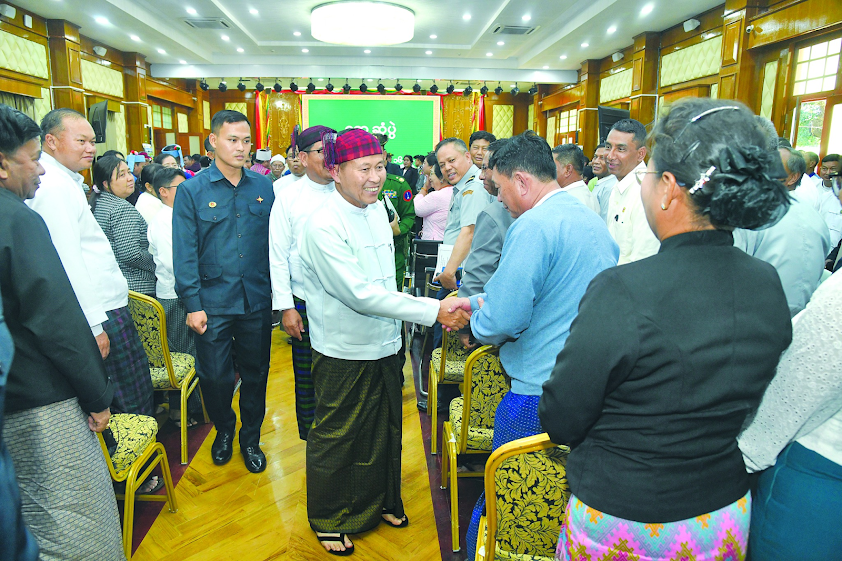
According to media reports, Soe Win, the junta’s deputy leader who is currently visiting Kachin State, told officials from the Kachin State government offices in Myitkyina that the regime intends to resume implementation of the Ayeyarwady Myitsone hydropower project.
The project was originally agreed in 2009 under the late-stage SPDC military regime, when a contract was signed with China and preparatory work began.
During President Thein Sein’s term, however, local communities in Kachin State, as well as civil society groups and activists from other regions, strongly opposed the project.
As a result, Thein Sein’s government suspended it.
The key reasons for opposition at the time included:
-
Tens of thousands of people living in areas that would be flooded losing their homes and livelihoods
-
Environmental damage and loss of biodiversity along the Ayeyarwady River
-
Fears that, because the site is close to the Sagaing fault, a dam failure could have disastrous downstream impacts.
We can interpret the suspension under Thein Sein either as a sign that public opinion and local concerns were being given weight, or as an attempt to demonstrate that the political transition towards democracy at that time was genuine.
After the 2021 coup, the junta no longer feels any need to pay attention to civil society or public opinion.
From its perspective, it is free to push ahead again with the project.
China, for its part, has long viewed the suspension of Myitsone as a breach of Myanmar’s agreement.
Since 2024, when the junta began to rely once again on China for diplomatic backing and military technology and weapons, it seems likely that the generals are trying to please Beijing by moving to restart the project.
Since the coup, the junta has lost control over large swathes of territory across the country, including major areas of Kachin State.
Currently, it can hold little more than Myitkyina town itself, while most of the wider region is under KIA control.
In such a situation, it is doubtful whether the regime is actually capable of physically restarting work at the Myitsone site.
Announcing its intention to do so may be less about practical implementation and more about:
-
Appeasing China, and
-
Encouraging Beijing either to pressure the KIA to pull back from the project area, or to provide the junta with more weapons and technology so it can try to drive the KIA out.
In other words, behind this move lies the junta’s effort to secure China’s tangible backing in the civil war.
I don’t think you need a fortune-teller to see that.